﹡Based on actual products, please contact our sales specialist to order


* If you cannot get the file through the download link, please write to us or leave a message through the LINE official account, and we will directly send the file to you. Thank you.
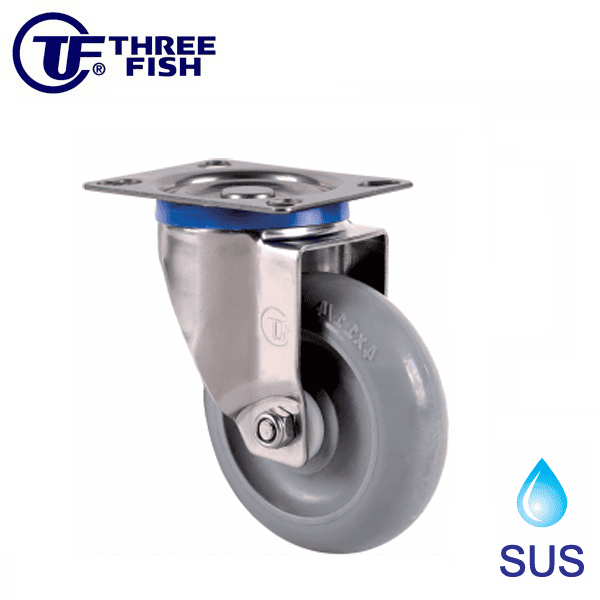
3404-STR-075
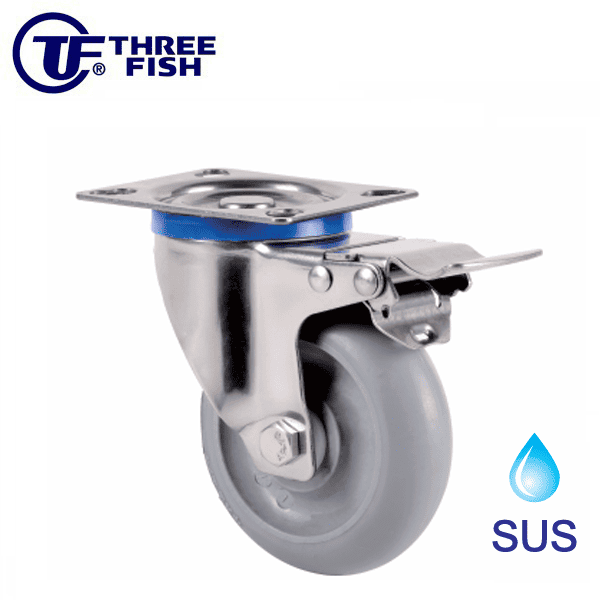
3404-GTR-075
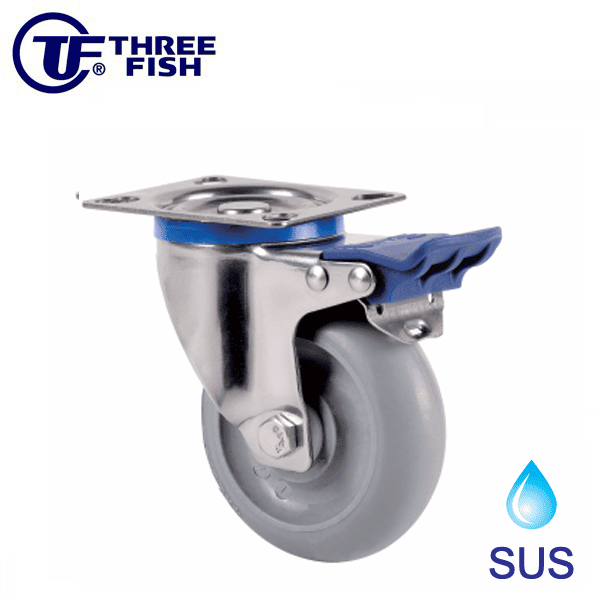
3404-HTR-075
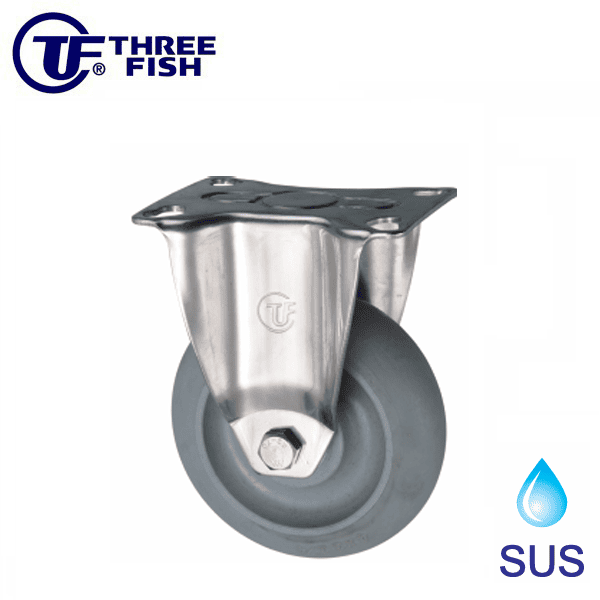
3404-RTR-075
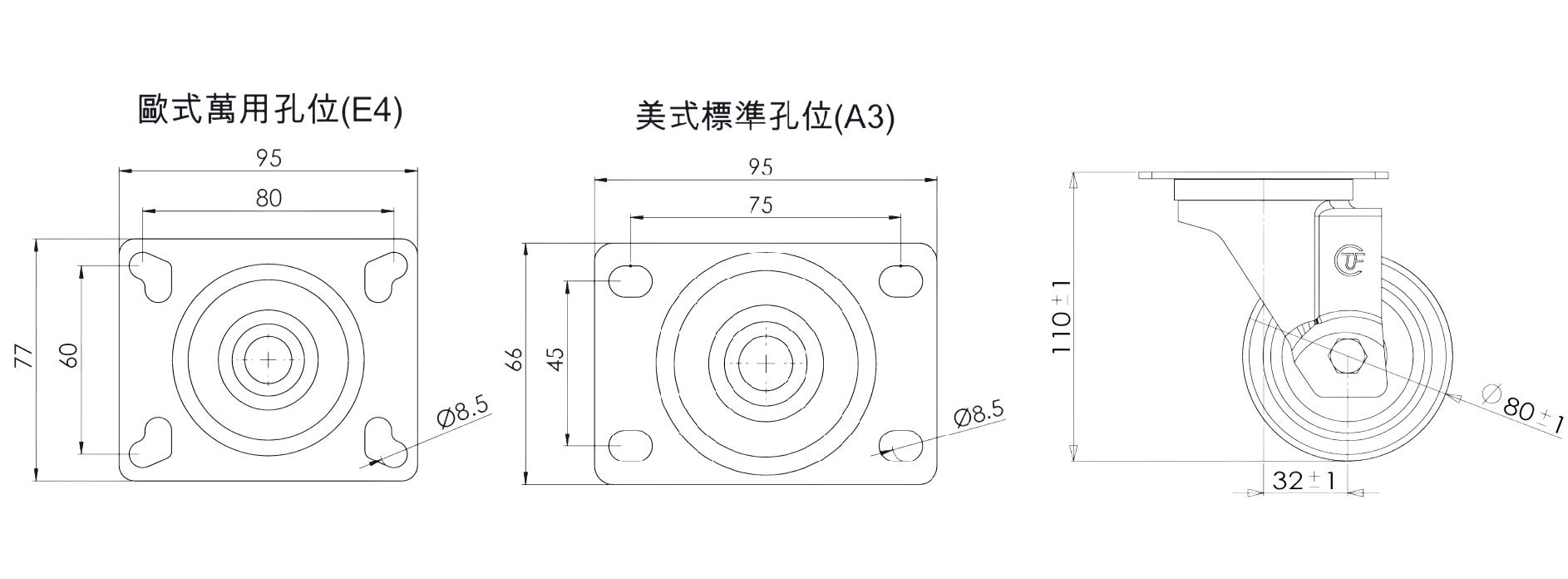
If you are unable to obtain the file through the download link, please contact us by Email or leave a message via our official LINE account. We will send the file to you directly by email. Thank you.

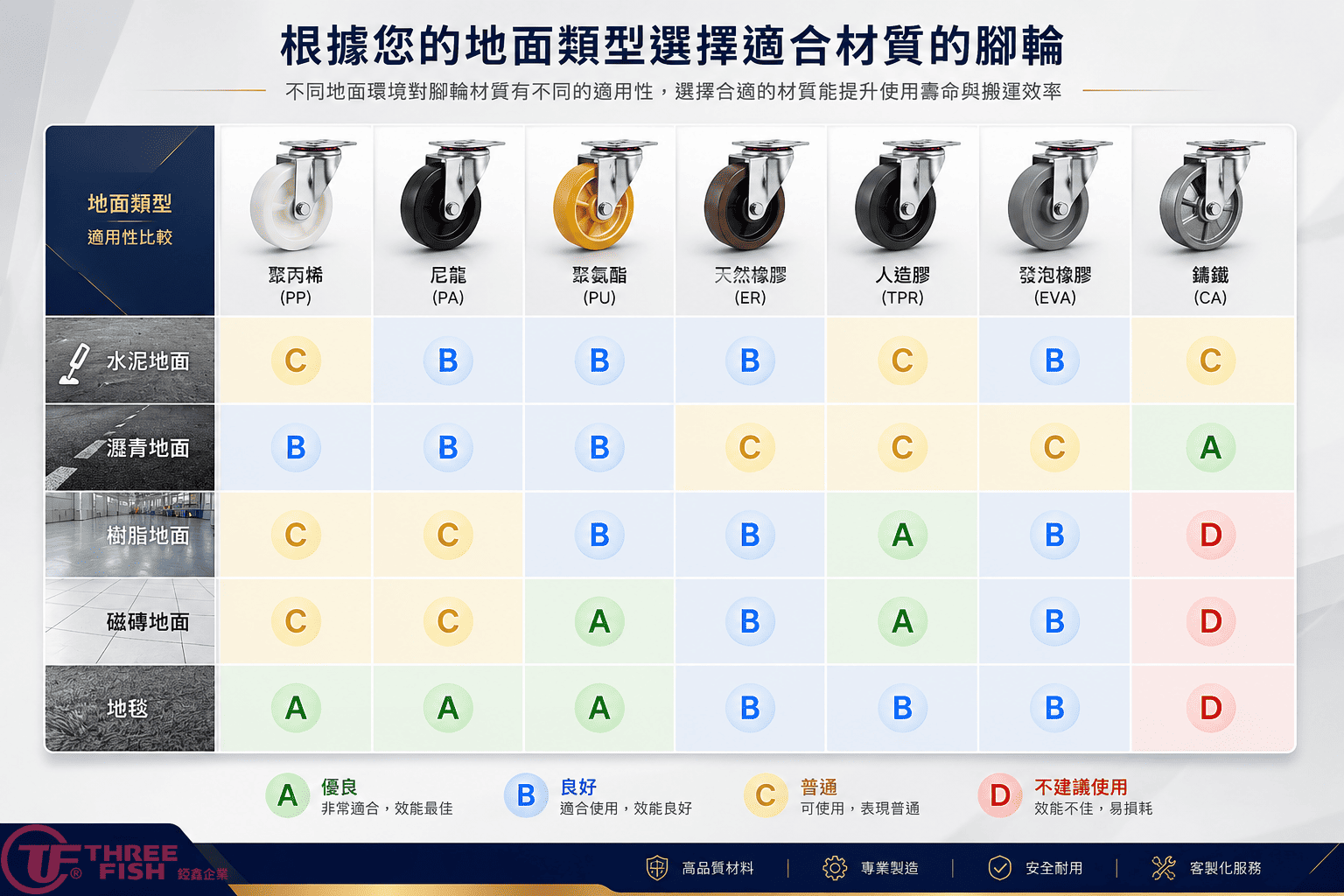
Different floor materials affect the pushing resistance, wear resistance, noise, and service life of industrial casters. Choosing the right PU casters, TPR casters, nylon casters, or rubber casters based on different floor materials such as cement, resin, ceramic tiles, and carpet can improve handling efficiency and extend equipment lifespan.
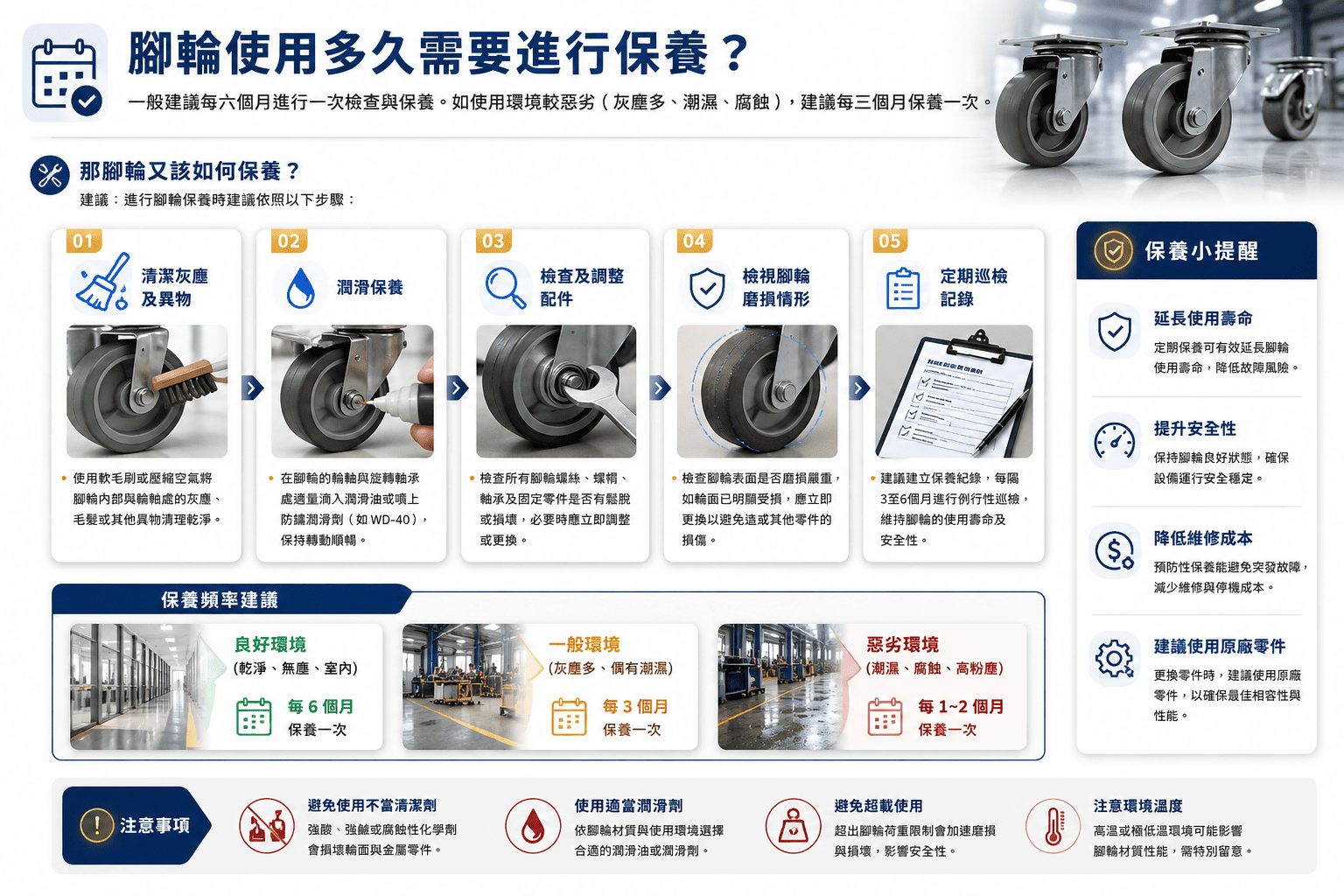
Check and maintain casters every 6 months. For harsh environments (dusty, humid, corrosive), maintenance every 3 months is recommended.
How should I maintain industrial casters?
Follow these steps to properly maintain casters:
Caster temperature resistance varies by material. PA and PP wheels typically withstand -20°C to +80°C; iron and high-temp wheels can reach 250°C or more. Choose according to your environment, and inspect regularly for material changes in extreme temperatures.
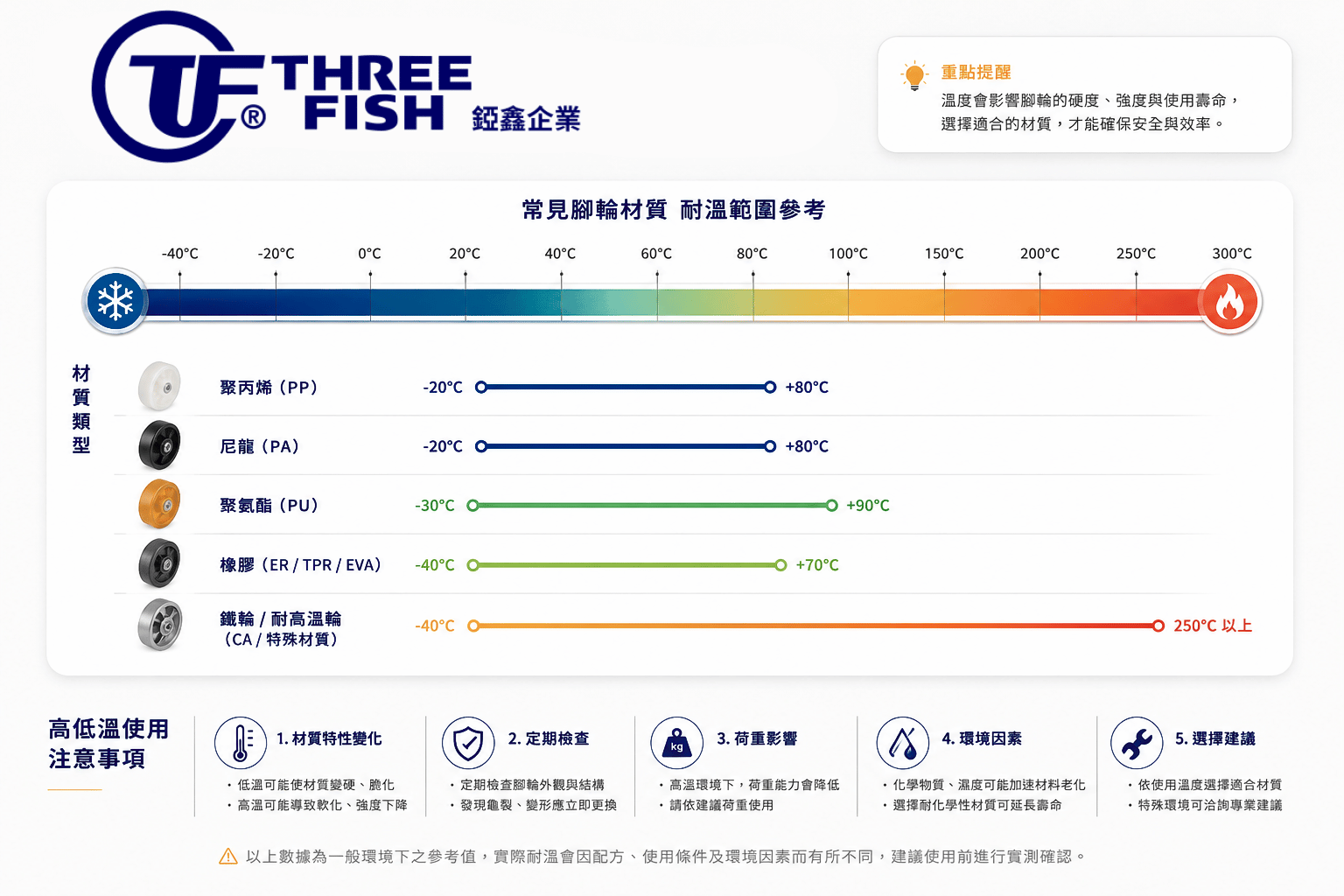
Common brake types include side brakes, total lock brakes, and pedal brakes. Choose based on your equipment’s mobility requirements, safety considerations, and ease of operation. For frequent stationary use, total lock brakes are recommended.

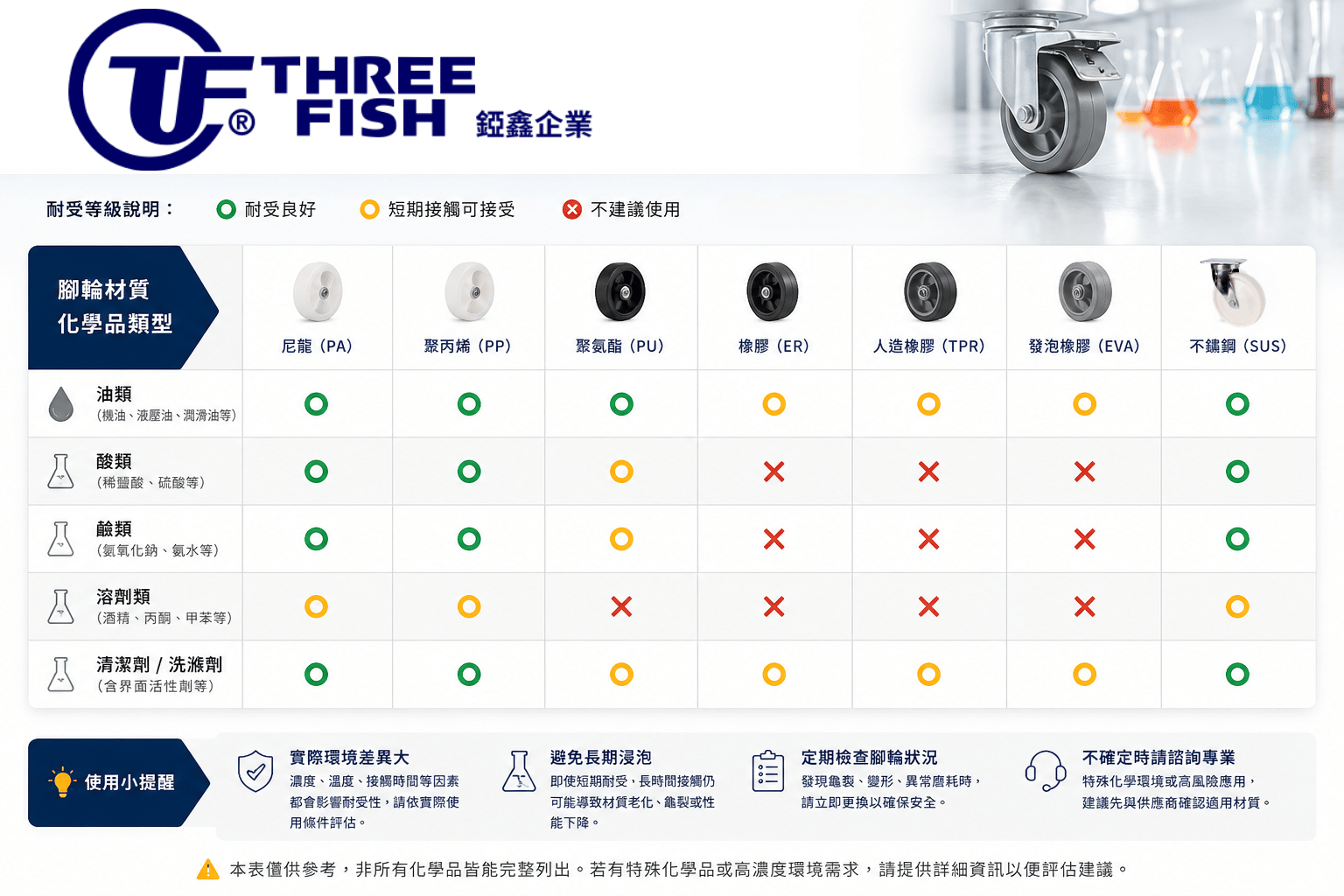
Different caster materials have varying degrees of resistance to oils, acids, alkalis, and chemicals. If used in chemical, food, laboratory, or special process environments, it is recommended to select industrial casters with better chemical resistance based on the medium they will be exposed to, in order to avoid aging, swelling, cracking, or performance degradation of the caster surface, thereby extending its service life and ensuring equipment safety.
Ball bearings offer smoother rotation and are ideal for frequent or low-resistance movement. Plain (sleeve) bearings are simpler, dirt-resistant, and suitable for low-speed or harsh environments. Choose based on operational demands and environmental conditions.
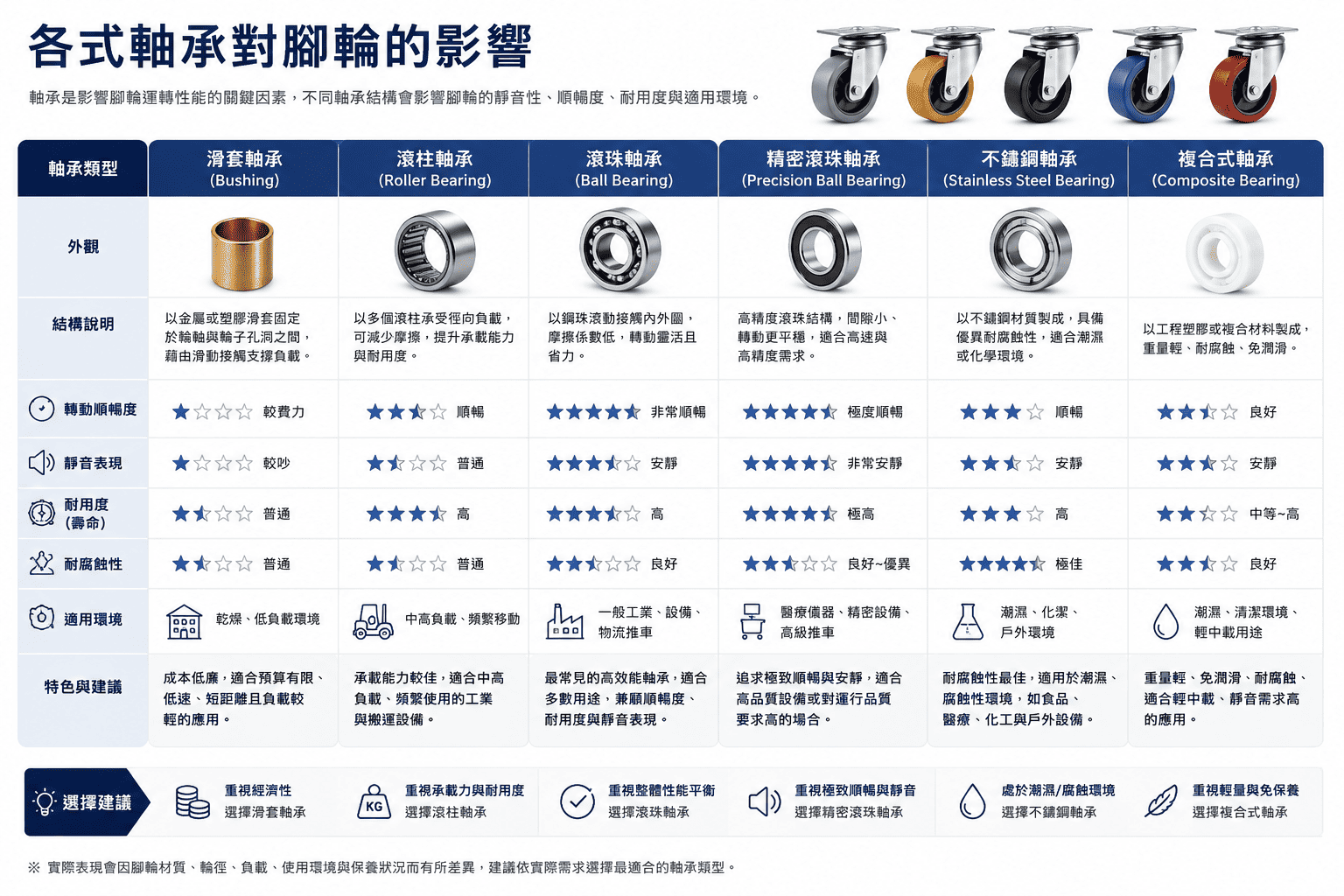
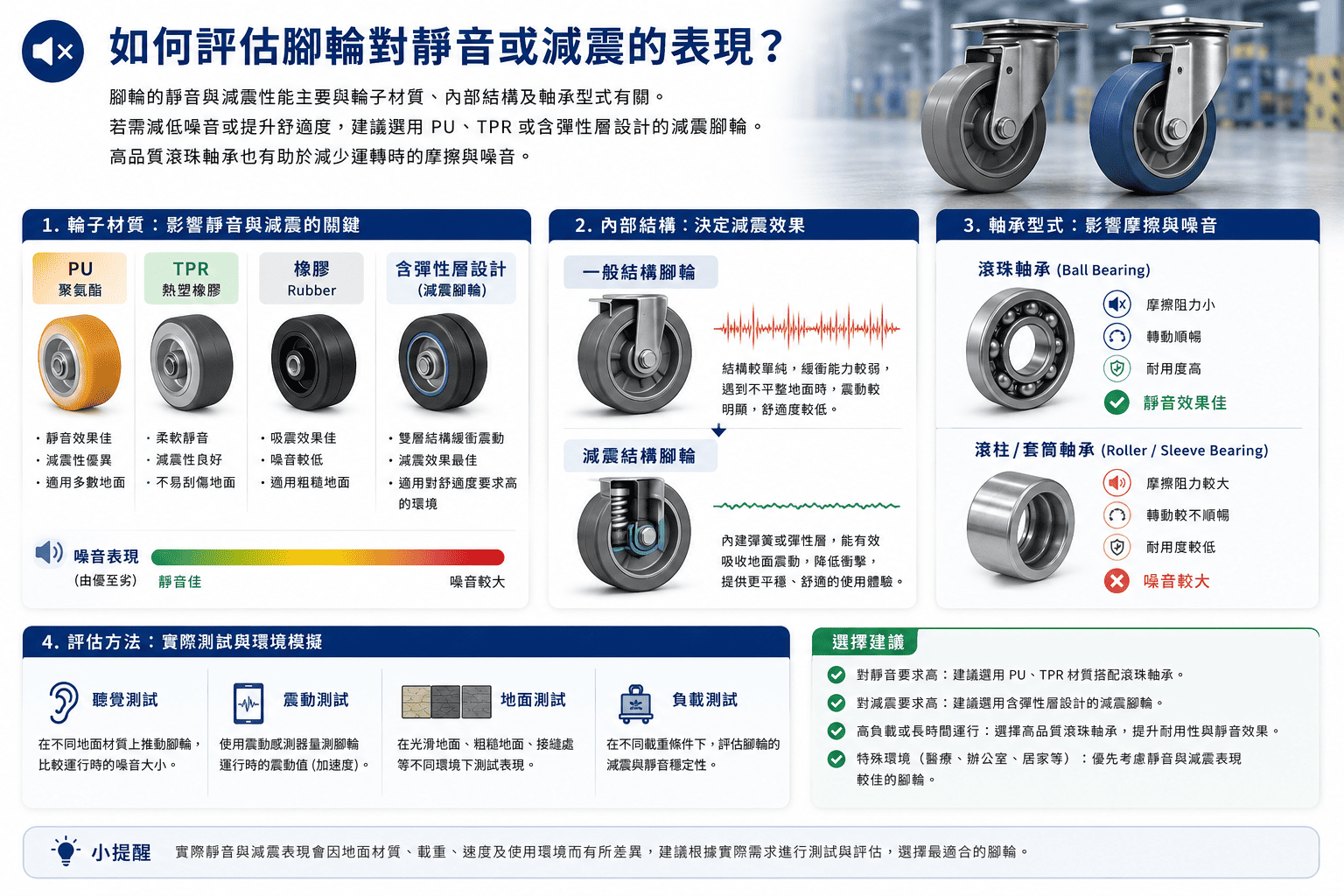
Noise and shock absorption depend on wheel material, internal structure, and bearing type. For quiet or smooth operation, choose PU (polyurethane), TPR (thermoplastic rubber), or shock-absorbing casters with elastic layers. High-quality ball bearings further reduce friction and operational noise.