6

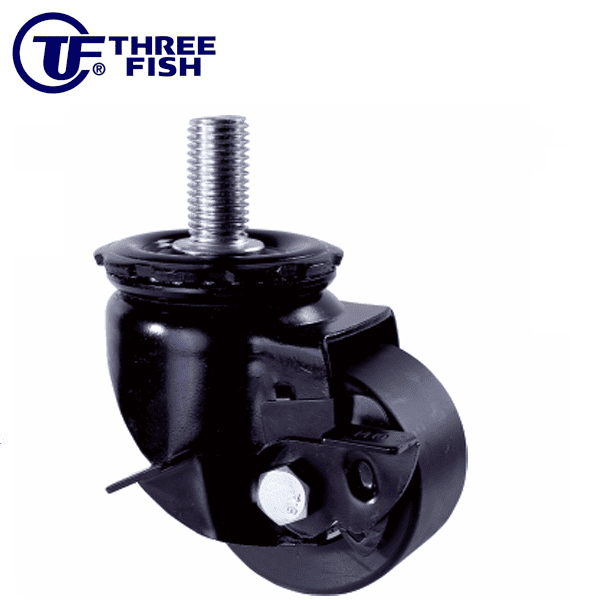
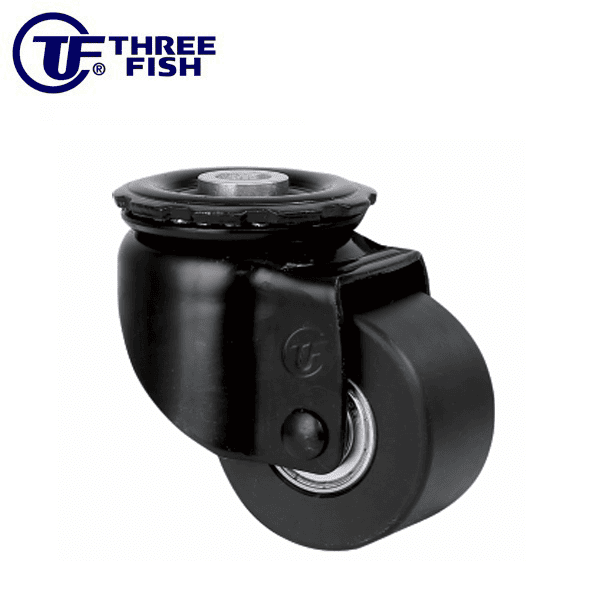
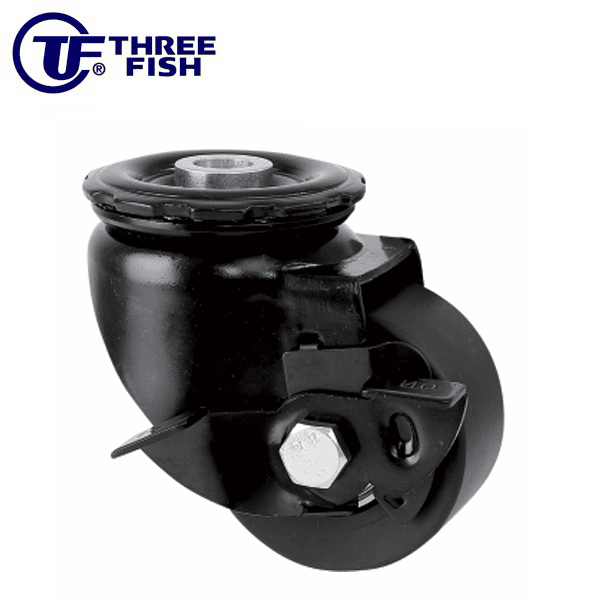
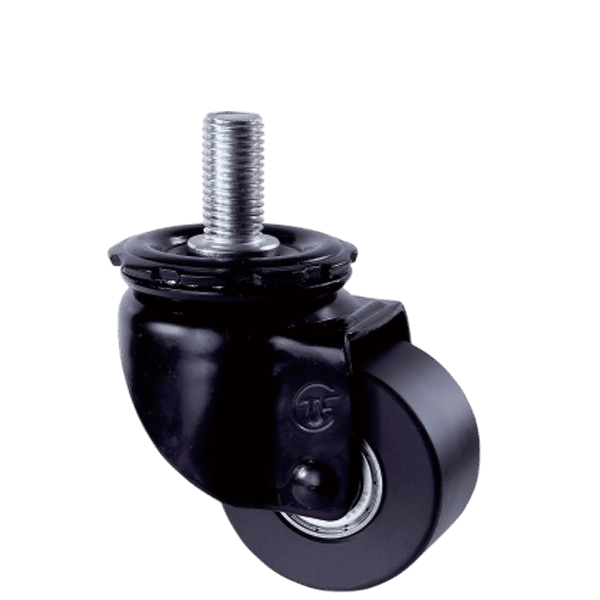
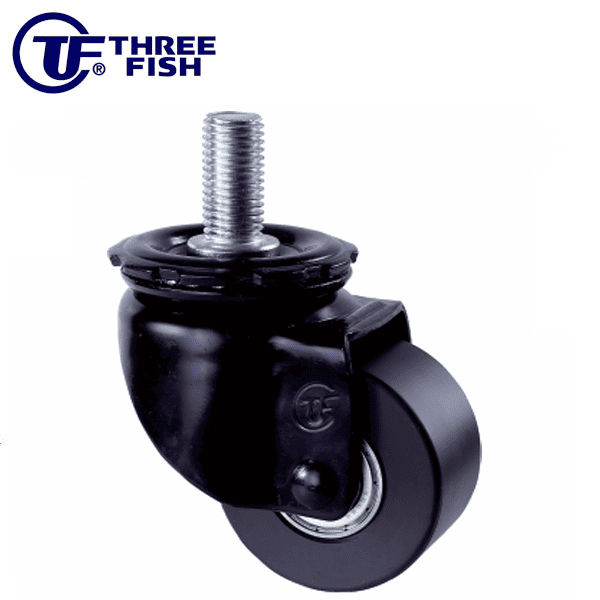
615 PO Nylon Wheel Series - Threaded Stem Mounting 6207-063

Tag:#萬向輪 #設備專用腳輪 #Low Profile Caster #ORV3適配腳輪 #低矮床 #高負載

  • Low center of gravity casters
  • Integrated stretch forming bracket
  • Electrophoretic anti-rust surface
  • Increase the double wave plate
  • Double layer ball design
  • PO wheel - specially formulated engineering nylon wheel with higher strength and longer life
  • Applicable to: Server cabinets. Power distribution equipment. Data center equipment. Clean room equipment. Wafer handling equipment. PCB production equipment. Smart device transport vehicles. Edge computing equipment. Mobile edge server cabinets. IoT key equipment. Processing equipment. Base. Mold transport rack. Precision assembly equipment. Robotic workstation. Automated conveying equipment. AGV automatic guided vehicle. Ground maintenance equipment. Ammunition transport device. Battery assembly platform. New energy equipment test bench. Photovoltaic and wind energy equipment. Gantry machining center. Tools. Storage racks. Measuring equipment. Transformer transport vehicles. Mobile power testing equipment. Power station auxiliary equipment. Mobile distribution cabinets. Production inspection platform

﹡Based on actual products, please contact our sales specialist to order


* If you cannot get the file through the download link, please write to us or leave a message through the LINE official account, and we will directly send the file to you. Thank you.
Bracket Type

6207-SPO-063

615sOUBb063poXOT12
2.5"PO Nylon-Swival Caster

6207-DPO-063

615dOUBb063poXOT12
2.5"PO Nylon-Metal side lock Caster

6208-SPO-063

615sOUBb063poXLB3
2.5"PO Nylon-Hollow Swival Caster

6208-DPO-063

615dOUBb063poXLB3
2.5"PO Nylon-Hollow Metal side lock Caster
Size
2.5”
Installation Method
Threaded Stem Mounting
Material
PO Nylon
Wheel Diameter
63mm
Wheel Width
45mm
Load Capacity
400kg
Overall Height
109mm
Threaded Size
M20*40
Hollow Size
Ø16
Radius of gyration
70
Surface treatment
Electrophoretic(EPD)
Applications
Server cabinet. Electronics. Semiconductor. Precision machinery. Industrial automation. New energy

FAQ

If you are unable to obtain the file through the download link, please contact us by Email or leave a message via our official LINE account. We will send the file to you directly by email. Thank you.

  • However, if dust or debris has accumulated inside the caster, the wheel may not spin at all when flicked, or it may only rotate for a few seconds. You may also hear a squeaking or creaking sound during movement. These are clear signs that maintenance is needed.

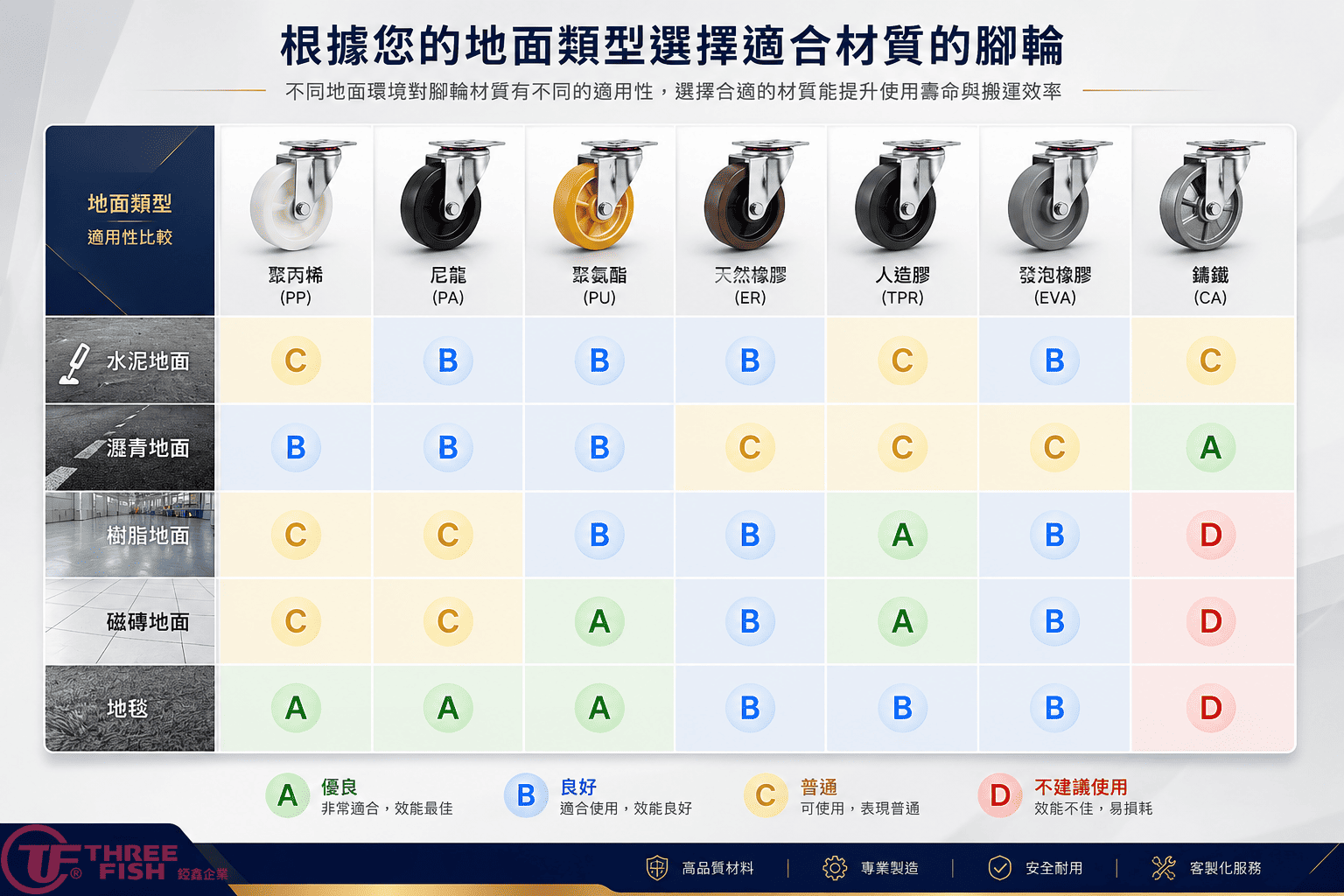
Different floor materials affect the pushing resistance, wear resistance, noise, and service life of industrial casters. Choosing the right PU casters, TPR casters, nylon casters, or rubber casters based on different floor materials such as cement, resin, ceramic tiles, and carpet can improve handling efficiency and extend equipment lifespan.

Check and maintain casters every 6 months. For harsh environments (dusty, humid, corrosive), maintenance every 3 months is recommended.

How should I maintain industrial casters?
Follow these steps to properly maintain casters:
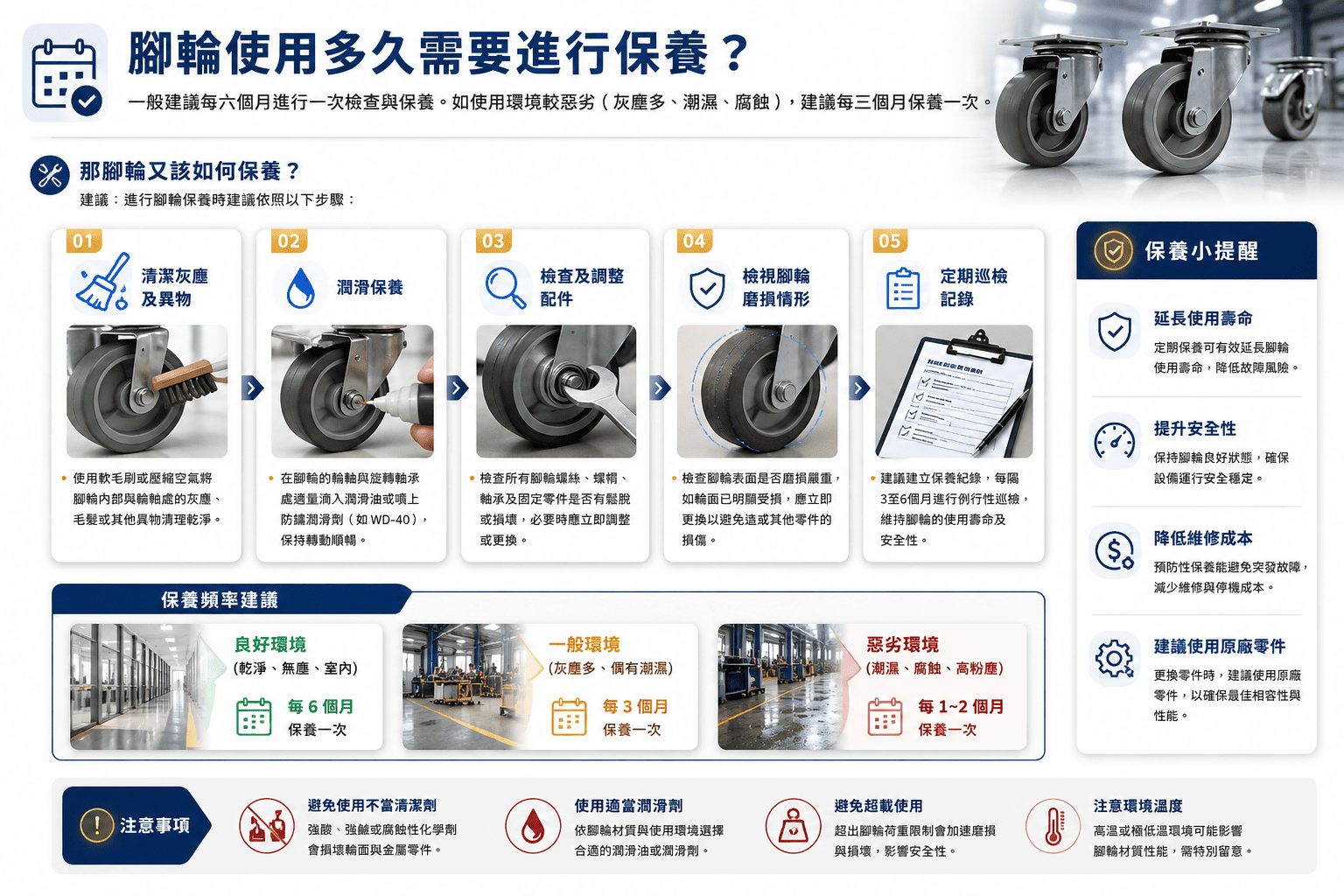
  1. Clean Dust and Debris:Use a soft brush or compressed air to thoroughly remove dust, hair, and foreign objects from inside the casters and around the wheel axle.
  2. Lubrication:Apply lubricating oil or anti-rust lubricant (such as WD-40) to the wheel axle and rotation bearings to maintain smooth operation.
  3. Inspect and Adjust Fittings:Check screws, nuts, bearings, and other fastening components for looseness or damage, and tighten or replace them as necessary.
  4. Check for Wear:Examine the caster wheel surfaces for excessive wear or damage. Replace worn wheels promptly to prevent further damage.
  5. Routine Inspection and Documentation:Maintain regular inspection records and conduct inspections every 3 to 6 months to extend caster lifespan and ensure operational safety.

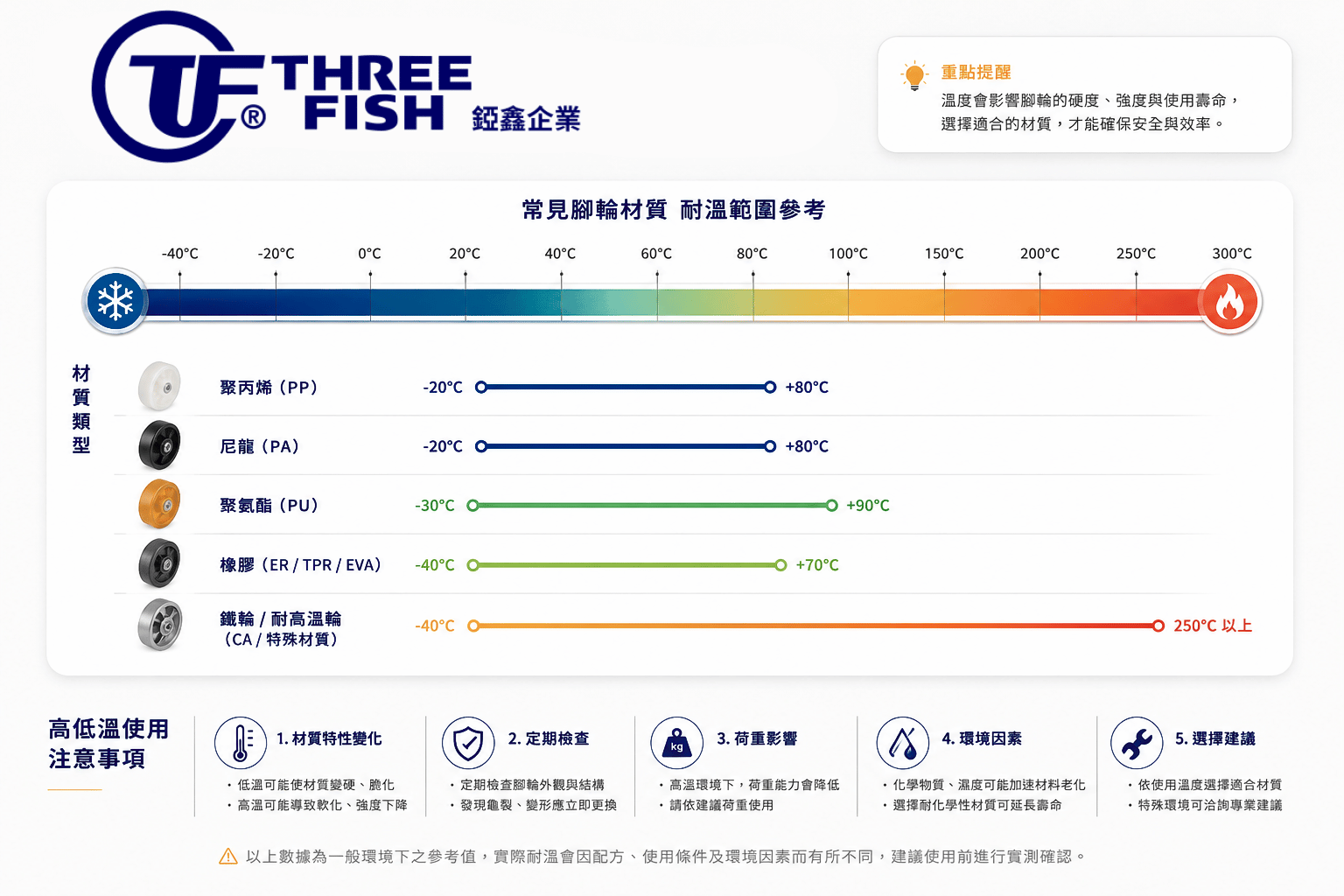
Caster temperature resistance varies by material. PA and PP wheels typically withstand -20°C to +80°C; iron and high-temp wheels can reach 250°C or more. Choose according to your environment, and inspect regularly for material changes in extreme temperatures.
Common brake types include side brakes, total lock brakes, and pedal brakes. Choose based on your equipment’s mobility requirements, safety considerations, and ease of operation. For frequent stationary use, total lock brakes are recommended.

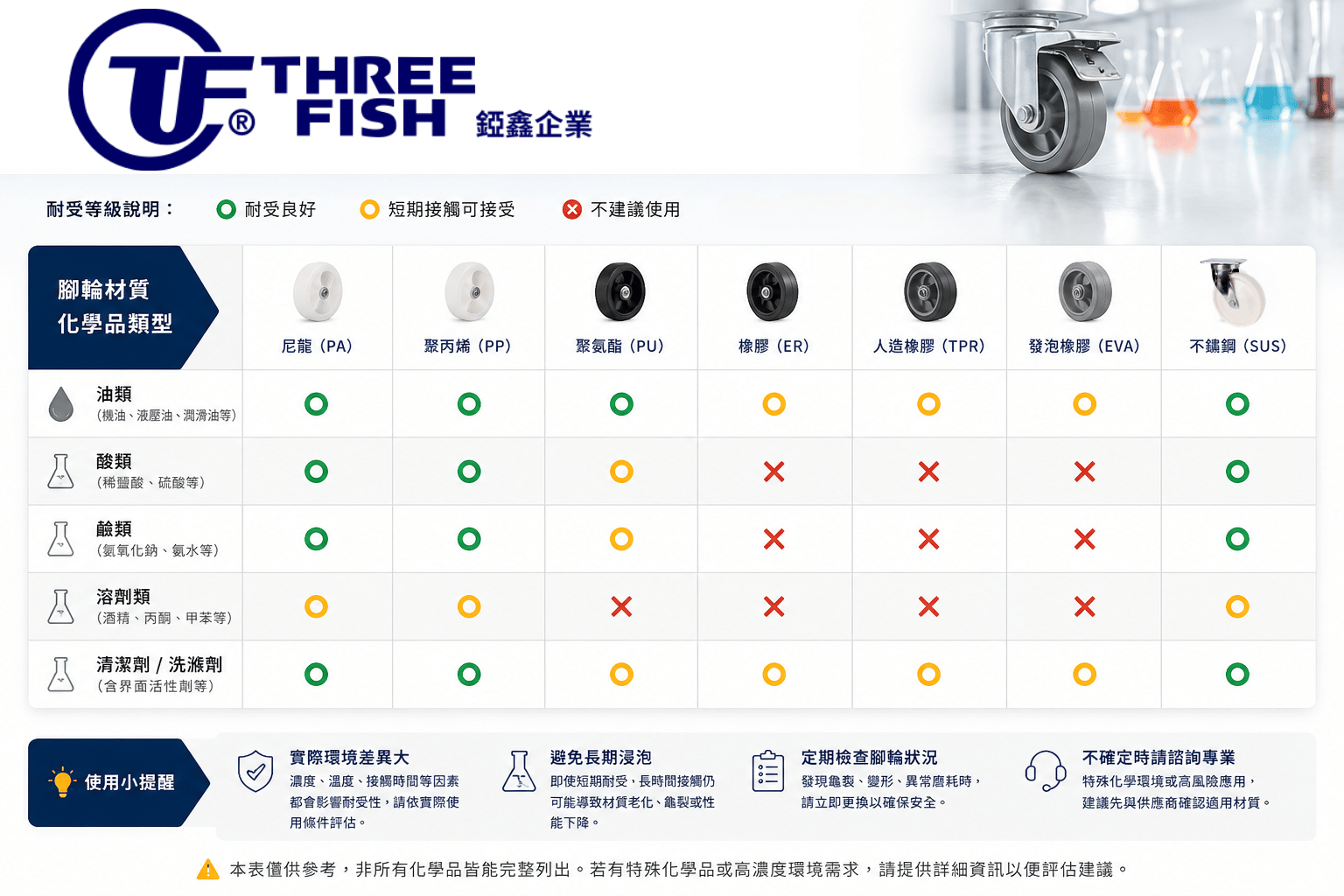
Different caster materials have varying degrees of resistance to oils, acids, alkalis, and chemicals. If used in chemical, food, laboratory, or special process environments, it is recommended to select industrial casters with better chemical resistance based on the medium they will be exposed to, in order to avoid aging, swelling, cracking, or performance degradation of the caster surface, thereby extending its service life and ensuring equipment safety.
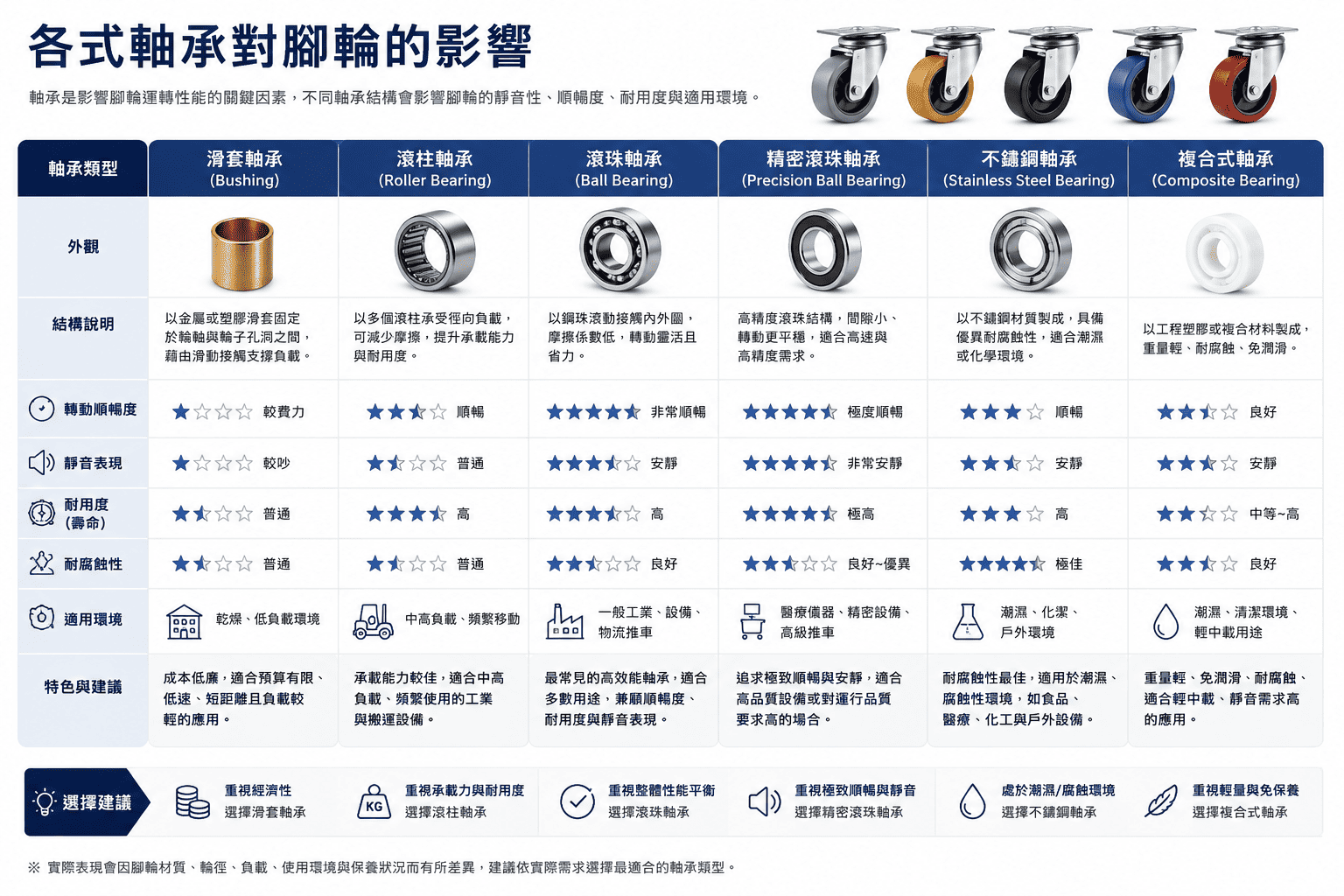
Ball bearings offer smoother rotation and are ideal for frequent or low-resistance movement. Plain (sleeve) bearings are simpler, dirt-resistant, and suitable for low-speed or harsh environments. Choose based on operational demands and environmental conditions.
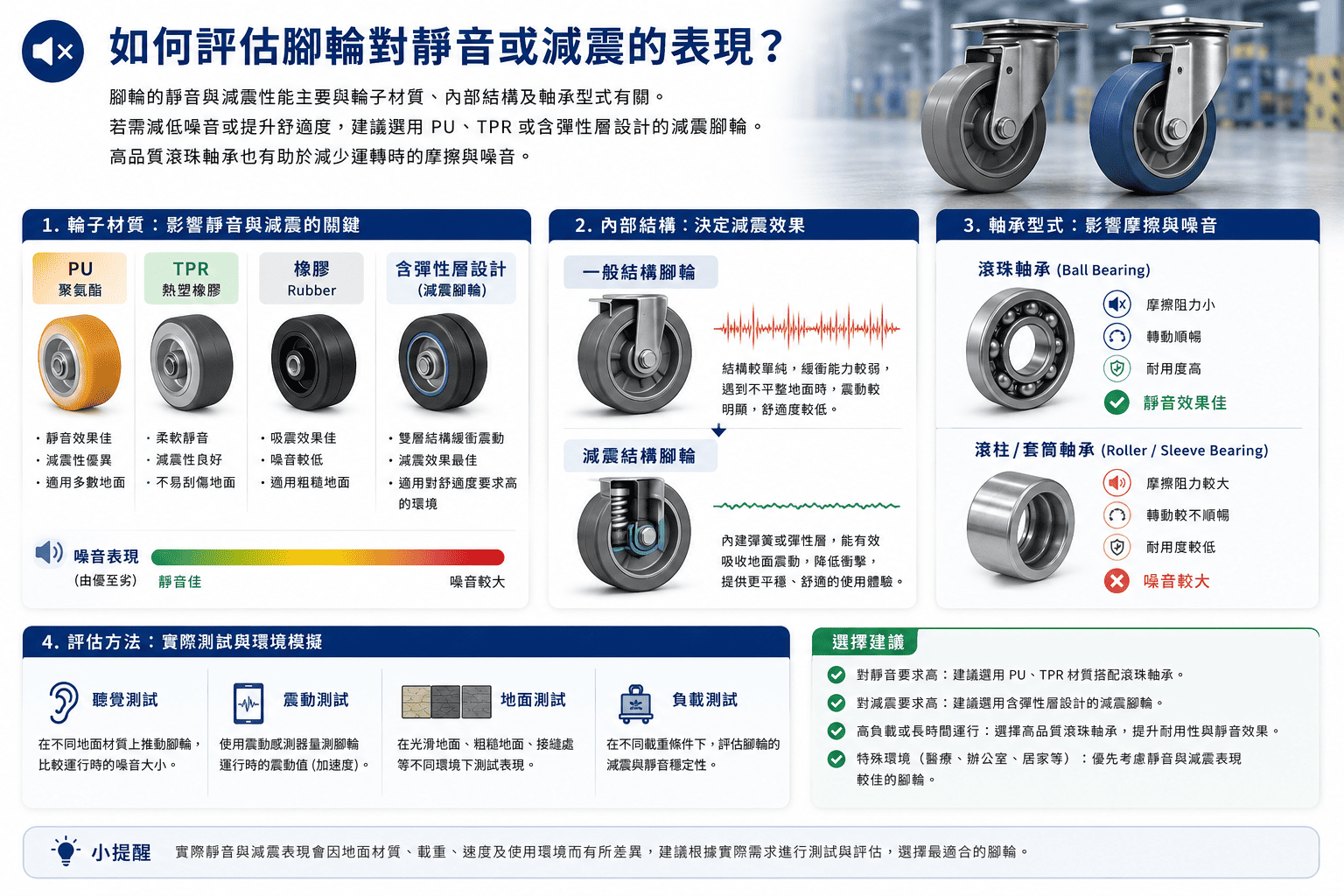
Noise and shock absorption depend on wheel material, internal structure, and bearing type. For quiet or smooth operation, choose PU (polyurethane), TPR (thermoplastic rubber), or shock-absorbing casters with elastic layers. High-quality ball bearings further reduce friction and operational noise.
INQUIRY ITEMS

We use cookies to optimise this website and continuously update it according to your needs. If you continue to use the website, you agree to the use of cookies. Click below “Privacy Policy ” for more detailed information. Thank you!